
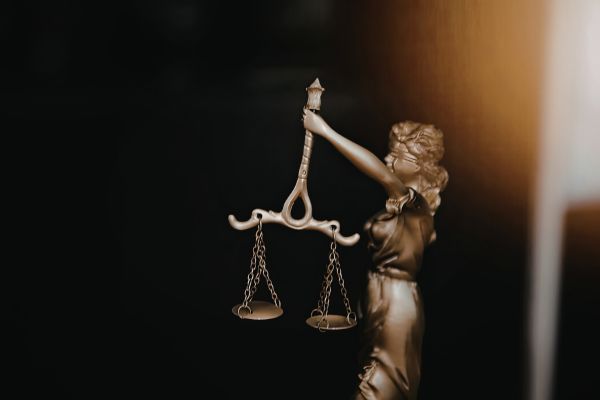
Understanding the Link Between International Courts and Human Rights
International courts and human rights are closely connected because both deal with one of the most difficult questions in modern law: what happens when a state fails to protect the people under its authority? For centuries, governments were mostly treated as the final legal authority inside their own borders. If a person was mistreated by police, denied a fair trial, tortured, displaced, or discriminated against, the first and often only place to seek justice was the national legal system.
That idea has changed significantly. Today, international law recognizes that some rights are too important to be left entirely to domestic politics. Human rights belong to people because they are human, not because a government decides to grant them. International courts exist, in part, to give legal weight to that principle.
These courts do not replace national courts in everyday life. They are not designed to handle every injustice or every complaint. Instead, they step in when serious legal questions cross borders, when states violate international obligations, or when domestic systems are unwilling or unable to provide meaningful justice.
Why International Courts Matter in Human Rights Protection
Human rights law is built on promises. States sign treaties, accept conventions, and agree to respect certain standards. But promises alone do not protect people. Courts matter because they can interpret those promises, apply them to real cases, and hold governments or individuals accountable.
This is where international courts become important. They transform broad legal principles into practical judgments. A treaty might say that torture is prohibited, that people have the right to a fair trial, or that discrimination is unlawful. A court then examines what those words mean in real situations: a prisoner held in poor conditions, a journalist silenced by the state, a community forced from its land, or civilians targeted during conflict.
The phrase international courts and human rights is not just about institutions and legal documents. It is about how law responds when human dignity is ignored. Without courts, human rights can remain moral statements. With courts, they become claims that can be argued, tested, and sometimes enforced.
The Main Types of International Courts
Not all international courts work in the same way. Some focus on disputes between states. Others focus on individual criminal responsibility. Some are regional human rights courts created for specific parts of the world.
The International Court of Justice, often called the ICJ, is the principal judicial organ of the United Nations. It mainly deals with legal disputes between states. Its work can affect human rights when cases involve genocide, occupation, racial discrimination, state responsibility, or treaty obligations. However, individuals cannot directly bring personal complaints before the ICJ.
The International Criminal Court, or ICC, is different. It focuses on individuals accused of the gravest international crimes, including genocide, crimes against humanity, war crimes, and aggression. Its role is not to handle every violation, but to address the most serious crimes that shock the conscience of the international community.
Then there are regional human rights courts. These are often more directly connected to everyday human rights claims. The European Court of Human Rights, the Inter-American Court of Human Rights, and the African Court on Human and Peoples’ Rights all operate within regional systems. They interpret human rights treaties and issue judgments that can require states to change laws, pay compensation, reopen proceedings, or take other corrective steps.
Regional Human Rights Courts and Their Influence
Regional courts often have the most direct influence on human rights protection because individuals or communities may be able to bring claims after domestic remedies have been exhausted. This makes them especially important for people who have tried to seek justice at home but found the system ineffective, biased, or closed to them.
The European Court of Human Rights has shaped national laws across Europe in areas such as privacy, fair trial rights, freedom of expression, prison conditions, family life, and discrimination. Its judgments have often pushed governments to reconsider laws or practices that were once treated as normal.
The Inter-American Court of Human Rights has also played a major role in cases involving forced disappearances, indigenous land rights, state violence, freedom of expression, and the rights of vulnerable communities. In many cases, it has not only awarded compensation but also ordered broader measures such as investigations, public apologies, or legal reforms.
The African Court on Human and Peoples’ Rights has contributed to the development of human rights protection in Africa, especially by interpreting regional human rights obligations. Like other regional courts, its strength depends on whether states accept its authority and comply with its decisions.
These courts show that human rights law is not only global in theory. It can also become regional, practical, and closely connected to the lives of ordinary people.
International Criminal Justice and Human Rights
Human rights law and international criminal law are related, but they are not identical. Human rights law usually focuses on the responsibility of states. International criminal law focuses on the responsibility of individuals who commit the most serious crimes.
The International Criminal Court is central to this area. Its purpose is not to hear every human rights complaint, but to address crimes so serious that they concern the international community as a whole. These include mass killings, systematic torture, persecution, sexual violence in conflict, forced displacement, and attacks on civilians.
This matters because serious human rights abuses are often carried out by people in positions of power: military leaders, political officials, militia commanders, or security forces. When national courts cannot or will not prosecute them, international criminal courts may offer another route toward accountability.
The process is rarely simple. Investigations take years. Evidence can be difficult to collect. Arrests depend heavily on state cooperation. Political pressure can also affect how international criminal justice is received. Still, the existence of international criminal courts sends an important message: even powerful individuals may be held responsible for crimes that violate basic human dignity.
The Principle of Accountability Beyond Borders
One of the most important ideas behind international courts is that some wrongs cannot be hidden behind borders. A government cannot simply say, “This is an internal matter,” when allegations involve genocide, torture, crimes against humanity, or systematic discrimination.
This does not mean international law has erased state sovereignty. States remain central actors. They create treaties, join courts, and carry out judgments. But sovereignty is now balanced against responsibility. A state has authority, but it also has obligations.
This shift has changed how the world talks about justice. Victims of serious abuses may now appeal not only to national law but also to international standards. Civil society groups, journalists, lawyers, and human rights defenders often use international courts as part of a wider struggle for recognition and accountability.
Even when a judgment does not solve everything, it can create an official record. It can confirm that a violation happened. It can challenge denial. For survivors, that recognition can matter deeply.
The Limits of International Courts
International courts are important, but they are not magic solutions. Their limits are real and sometimes frustrating.
First, they often depend on states for enforcement. Courts do not usually have their own police forces. If a state refuses to arrest a suspect, pay compensation, or change a law, the court must rely on political pressure, treaty bodies, regional organizations, or other states.
Second, access can be difficult. Many courts require victims to go through domestic courts first. This can take years. Some people never reach the international level because they lack legal support, money, documentation, or safety.
Third, international courts can be accused of bias or selective justice. Some critics argue that weaker states face more scrutiny than powerful ones. Others believe international justice moves too slowly or becomes entangled in politics. These criticisms do not make the courts useless, but they do show why legitimacy matters. Courts must be independent, careful, and consistent if they want public trust.
Finally, a judgment cannot always repair the harm. It cannot bring back the dead, erase trauma, or instantly rebuild broken institutions. Legal accountability is only one part of justice. Truth-telling, reparations, reform, memory, and prevention are also needed.
How International Court Decisions Shape National Law
One of the quieter but most important effects of international courts is how they influence domestic law. A single judgment can lead a country to amend legislation, improve prison standards, reform police procedures, protect journalists, recognize minority rights, or strengthen fair trial guarantees.
This influence is not always dramatic. Sometimes it happens slowly, through legal training, constitutional interpretation, or changes in how judges understand rights. Lawyers may cite international judgments in national courts. Legislators may revise laws to avoid future violations. Human rights institutions may use international decisions as guidance.
In this way, international courts do more than punish wrongdoing. They help build a shared legal language. They show how broad principles should work in practical situations. Over time, that can raise expectations for how governments treat people.
Human Rights, Politics, and the Search for Justice
Human rights law exists in a world shaped by politics. International courts try to apply law, but their cases often involve war, authoritarianism, discrimination, historical injustice, or state violence. That means their work is rarely neutral in the eyes of everyone watching.
A ruling may be celebrated by victims and condemned by governments. An arrest warrant may be praised as accountability and criticized as interference. A judgment may expose uncomfortable truths about a state’s past or present conduct.
This tension is unavoidable. Human rights are not only legal ideas; they are also deeply human ones. They touch dignity, fear, memory, identity, and power. International courts operate in that difficult space, trying to give legal structure to claims that are often emotionally and politically charged.
That is why international courts must be careful in their reasoning. Their authority depends not only on legal texts but also on fairness, consistency, and independence. When they are seen as principled rather than political, their judgments carry greater moral weight.
The Future of International Courts and Human Rights
The future of international courts and human rights will depend on whether states continue to support the systems they created. Courts need funding, cooperation, judicial independence, and respect for their decisions. Without those things, even the strongest legal principles can become weak in practice.
At the same time, demand for international justice is unlikely to disappear. Conflicts, displacement, repression, and discrimination continue to affect millions of people. As long as national systems fail some victims, international courts will remain part of the search for accountability.
Their role may also evolve. Digital evidence, climate-related rights claims, cross-border surveillance, migration crises, and corporate accountability are all pushing human rights law into new territory. International courts will be asked to interpret old principles in modern conditions, and their answers may shape the next generation of legal protection.
Conclusion
International courts and human rights are connected by a simple but powerful idea: no government should have unlimited power over human dignity. These courts are not perfect, and they cannot fix every injustice. They move slowly, face political resistance, and often depend on states that may not want to cooperate.
Yet their existence matters. They give victims a language of rights beyond national borders. They create records where silence once stood. They remind governments that treaties are not just symbolic documents but legal commitments. Most of all, they keep alive the belief that even in the face of power, law can still speak for human dignity.
In international law, that belief is never easy to defend. But it remains one of the most important reasons international courts exist.